
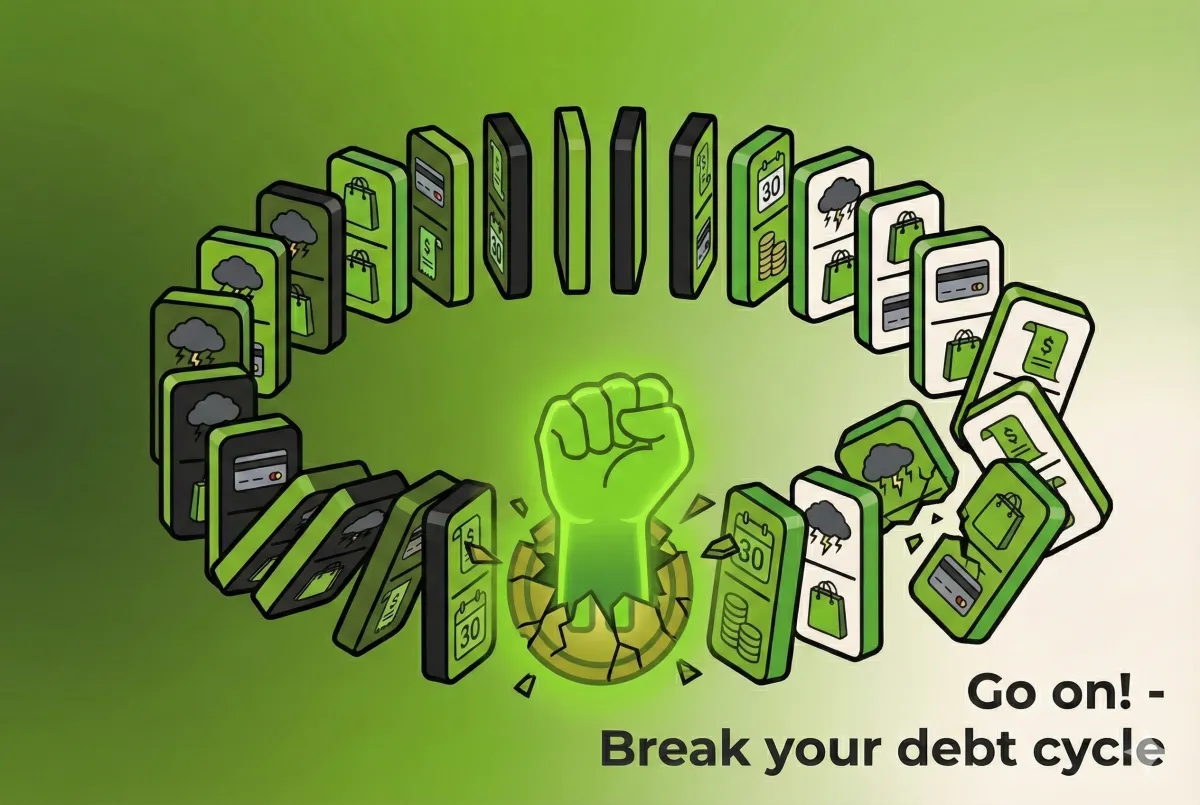
Debt-Spend Cycle in Australia – How Couples Can Break Free
Debt series - Stop the Debt-Spend Cycle: Breaking Free From the Pressure Loop
Key Points (Quick Scan)
Most people don’t have a debt problem — they have a cashflow or impulse problem.
The debt-spend cycle happens when stress drives spending, which creates more debt.
Awareness of triggers is the first step to breaking the loop.
Couples who swap blame for teamwork can escape the cycle faster.
Why Debt Keeps Coming Back
Have you ever paid off a credit card, only to find yourself back in debt six months later? That’s the debt-spend cycle. It’s not just about numbers — it’s about behaviour and emotions.
The cycle usually looks like this:
Stress or pressure builds.
Spending becomes a release or “solution.”
Debt grows.
Stress increases again.
And around it goes. Unless you tackle the why, debt keeps coming back.
A Couple’s Story: The “Oh Crap” Moment
One couple cleared a $7,000 personal loan. They celebrated — but a year later, they had almost the same amount back on credit cards.
Their “oh crap” moment came when they realised debt wasn’t their problem. Their real issue was untracked cashflow and emotional spending triggers. Once they set up a 3-bucket system and learned to pause before impulse buys, the cycle broke.
The lesson? Fix the cause, not just the balance.
Common Triggers Behind the Cycle
Stress relief: Buying something to feel better in the moment.
Boredom or distraction: Online shopping as entertainment.
Social pressure: Keeping up with friends or family expectations.
Cashflow gaps: Relying on debt when bills hit before pay day.
Sales & convenience: “Limited-time deals” and one-click checkout make impulse spending easier.
💡 Tip: Triggers aren’t excuses. They’re signals — and signals are something you can plan for.
How to Break the Debt-Spend Cycle
Identify your triggers. Notice when and why spending happens.
Create buffers. Even a small savings fund reduces the need to swipe credit.
Replace the release. Swap shopping with a walk, chat, or cheap treat.
Use cashflow systems. Automate bills, savings, and fun money to stay balanced.
Celebrate small wins. Each month without new debt is a step forward.
Add friction. Remove saved cards, wait 24 hours, or set a “spend rule” for anything over $50
Why Couples Should Face It Together
Less blame, more teamwork. Pointing fingers fuels the cycle; working together breaks it.
Shared awareness. Both partners see the triggers and patterns.
Emotional support. Breaking habits is easier when you’re not doing it alone.
Internal Links for Next Steps
Ready to Get Clear on Your Debt?
You can’t change what you don’t acknowledge. Categorising debt is the first step from stress to strategy
Ready to Write a New Story Together?
Your past shapes you, but it doesn’t define your future. By understanding your money stories, you and your partner can create a shared script that brings calm and confidence.
I have made this super easy planner, so easy my wife and i use it regularly to create and maintain our wealth scorecard.
So now you can too. Get access to the DTMD Financial Scorecard here - It is FREE to use
Built for real life, not spreadsheets
Super easy to use
Buffers, budgeting, debt help and more
FAQ: Breaking the Cycle
Q: Why do I keep ending up back in debt?
A: Because paying it off doesn’t change the habits or triggers that created it. Once you tackle the root cause, the cycle ends.
Q: Should we cut up our credit cards?
A: For many couples, yes — at least until you’ve built buffers and a new system. But the bigger shift is changing your behaviour, not just the tool.
Takeaways (Expanded Recap)
The debt-spend cycle is fuelled by stress, habits, and untracked cashflow.
Identifying triggers is the first step to breaking it.
Buffers, replacement habits, and systems prevent relapse.
Couples who work together, not against each other, escape faster.
Wealth Together provides the tools to break cycles and build lasting change.
Final Thoughts
To wrap things up: debt isn’t just a maths problem. It’s a behaviour cycle. Break the loop, and you’ll not only clear balances — you’ll stay free for good.
Remember: debt freedom comes from fixing the cause, not just the balance.
— Dave The Money Dad
Financial Disclaimer
This is not financial advice. The information provided is for educational purposes only. Please consider your personal circumstances or seek professional advice before making financial decisions.